.png)
From the Studio to the Kitchen

At 60, David Hull traded a radio news microphone for a personal chef's apron.
I used to be someone else. Several times, in fact. Once or twice, I chose to become someone else. Sometimes I was pushed into it. When that happened, I always tried to make sure my pockets contained stuff I might need.
My current incarnation as a personal chef resulted from a push. Fortunately, at 60 I had plenty of experience to draw upon as I thought about what came next.
Most of the time we are defined by occupation. I was often asked, “What do you do for a living?” Rarely did anyone ask who I was. It took many years to finally understand that what I do and who I am are not the same thing.
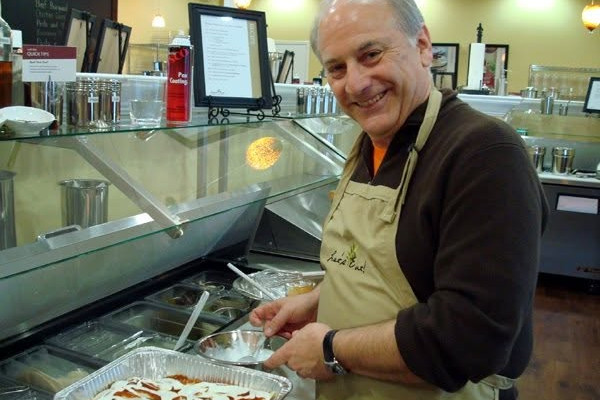
My Mom had many skills, not many of which were related to the kitchen. So, I spent a lot of time as a kid teaching myself how to make breakfast and lunch while manipulating my friends into inviting me for dinner, especially on those nights when my mom planned to dish up the dreaded canned salmon croquettes and navy beans. I also somehow never managed to attract a woman who could cook. So cooking was not only about enjoyment, it was also a matter of survival.
Did I envision food preparation as a career? Never. I spent no time as a young man flipping burgers. But I learned a few things over the years, including how people from different backgrounds and cultures approach food. And that no matter what the occasion — wedding, funeral, family reunion, holiday — there was always a big table full of food. I remember the first time I tasted lamb. It was like that moment in the Wizard of Oz when Dorothy walks out of the house into Munchkinland and everything morphs from black and white into color.
Most of my adult life was spent as a radio broadcaster. It was the only thing I ever wanted to do. When other kids were playing army or cowboys, I was in my room pretending to be a disk jockey or a newscaster. As a news pro, I reported on most of the major events that were shaping the world, from the moon landing to the civil rights movement to the development of computers and AI. Change was the only constant, and the way it affected our lives was top of mind.
At age 60 I was laid off from my last radio job; not because I sucked or made mistakes but because the “businessmen” who owned the property determined that humans were more expensive to maintain than automation. I could have chased another radio job, but I decided it was time for a real change.
What holds us back from enjoying WHO we are instead of what we do? Living according to expectations, not what we really want. Waiting for the right time, not acting on things that could have made a difference, choosing comfort instead of growth, caring too much about what others thought. Most of the time, when a person says, “I can’t,” what they really mean is “I won’t.”

In my final year as a broadcaster, I co-hosted a show with the local newspaper food editor. We reviewed restaurants and talked about food. I learned a lot about the industry inside and out.
When I was let go, I went out on a limb and took a loan to attend culinary school. I discovered some things in addition to the fifty years of poor cooking habits that needed correcting. I realized that my experience in life, the places I had seen, the people I had met, provided me with a wealth of stories that might be useful in my food presentation. I set my sights on becoming a personal chef and never looked back.
It wasn’t easy to build the business. I drew on every contact I had ever made — family, friends, former colleagues — to spread the word. I sat in tents handing out food samples; I managed a restaurant. I waited for the phone to ring as I slowly built my clientele, a lot by word of mouth. After one dinner party, the dozen people at the table applauded me and told me what a good time they had, not just because the food was tasty but because they enjoyed my company and my stories.
If at first you don’t succeed? Trite, I know. But Edison failed many times before he invented the light bulb and that’s why people remember him. Or as another mentor told me, “You can hate the fact that a rose bush has thorns, or you can find joy in the fact that a thorn bush has roses.”


Comments